DIY(Do-It-Yourself):
Tips for getting a better outcome at a car dealership.
Before visiting a car dealership, it’s very important to prepare yourself by
understanding what to expect during the buying process. Being informed can help you avoid costly mistakes, make confident decisions, and achieve a better overall outcome.
Here are some of the things you should know and expect at a car dealership.
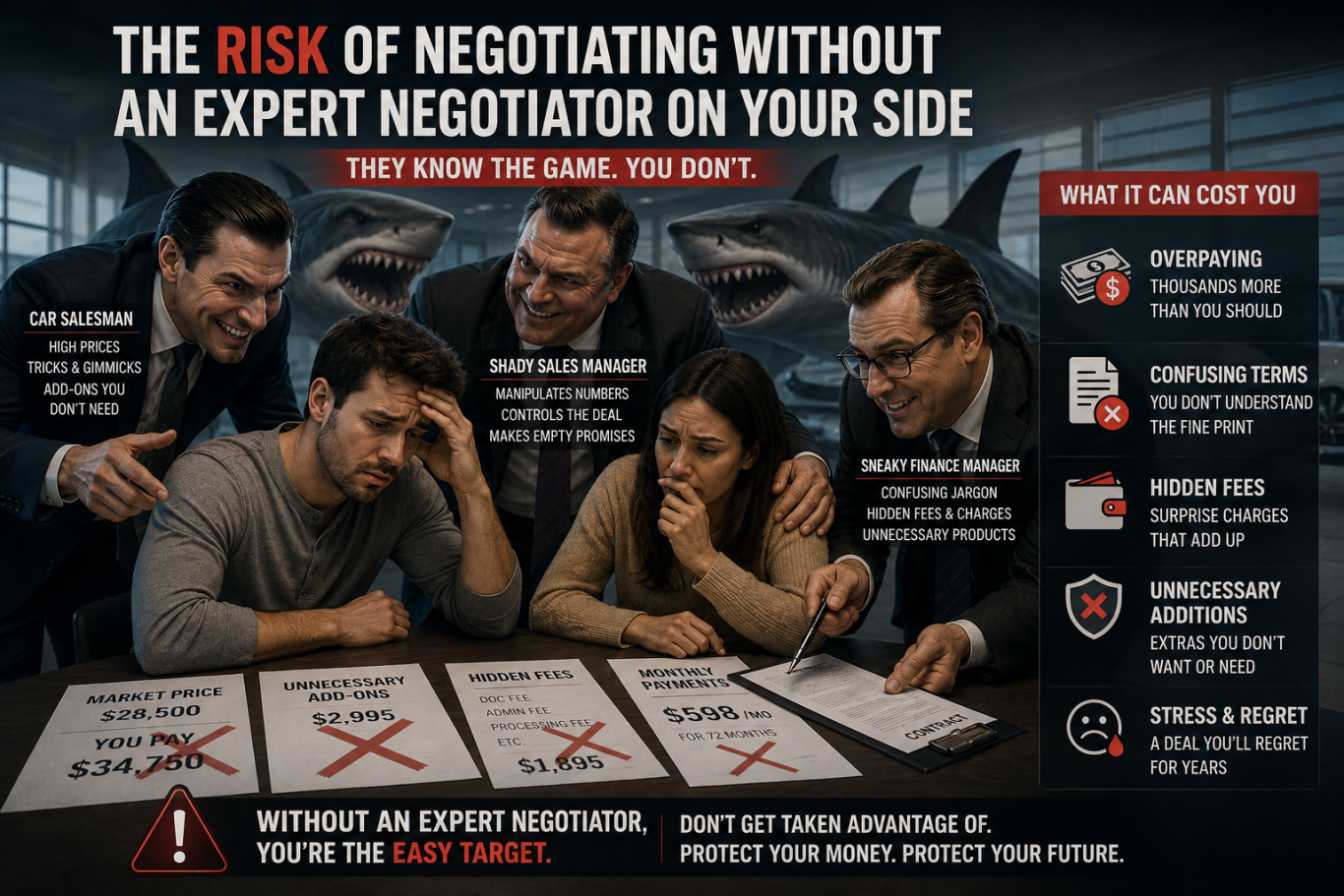
*They are there to sell you a vehicle and make a profit — not to entertain you.
-Don’t get emotionally attached to the salesperson or the vehicle. Dealerships often say, “Feel the wheel, half the deal.”
*Here are a few things you may want to avoid saying at a dealership.
-Don’t tell them that you know someone who works at a dealership unless you actually have a family member who works
there. Many people believe they will get a special employee or family discount just because they know someone at the
dealership. In reality, the dealership may see you as an easy target because they assume you won’t negotiate aggressively.
-Avoid immediately disclosing whether you plan to pay cash or finance when asked at the dealership. Dealers may adjust their pricing strategy once
they understand your payment method, as financing can introduce additional profit opportunities on the backend, while cash buyers may receive
less flexibility on price. Instead, consider focusing the discussion on the “out-the-door price,” which allows you to evaluate the full cost of the vehicle,
including all fees and charges, before discussing payment details.
*They are trained not to disclose pricing details until the customer visits the showroom in person.
-They will use various sales techniques to encourage in-person visits, as face-to-face interactions can increase the likelihood of closing a transaction.
*They are trained to keep customers at the showroom longer once they arrive in person.
-They will use various sales techniques to prolong a customer’s visit, such as temporarily holding trade-in vehicle keys while stating that additional
staff members are inspecting the vehicle, as extended showroom visits can increase the likelihood of completing a sale.
*They are trained to close and finalize the deal as quickly as possible to secure the sale.
-They will try to get you to take possession of the vehicle on your first visit or keep you from leaving the dealership once you
commit to moving forward with them — commonly known as a “spot” sale. This is because they do not want you to change
your mind for any reason and risk losing the sale. Typical car dealerships pay their salespeople a “spot” bonus — usually
somewhere between $25 and $400 per vehicle — for that reason.
-In most cases, dealerships do not accept returns once the purchase paperwork has been signed and the vehicle has left the lot. This is
why it is important for buyers to carefully review all terms, pricing, warranties, and financing details before completing the transaction.
*Their sales teams are trained to sell vehicles that the dealership wants to move — such as leftover inventory, readily
available models, or highly profitable vehicles. Car dealerships also tend to have high employee turnover rates, and new
salespeople may sometimes provide customers with incorrect information.
-Do your own research on the vehicle you’re interested in by reading reviews from actual owners online and watching
product reviews on platforms like YouTube before making any decision.
*They are trained to find reasons to offer you the lowest possible amount for your trade-in vehicle in order to maximize their
overall profit.
-Do your own research on the actual cash value of your trade-in vehicle by checking KBB(Kelley Blue Book), J.D. Power, Edmunds,
and CARFAX. Also, have multiple dealerships appraise your vehicle and provide offers. Don’t rely on just one dealer’s appraisal.
Make dealerships compete with each other so you can get the best offer possible for your trade-in.
-Negotiate the vehicle’s sale price first, and do not discuss the trade-in value at the same time. Separate your trade-in vehicle from the deal
structure, and sell it separately to a competing dealership if they cannot match or beat their competitor’s offer.
-Most dealerships may not offer significant additional trade-in value for aftermarket accessories or upgrades such as upgraded wheels,
tow hitches, seat covers, steering wheel covers, cross bars, roof racks, and similar items. If these additions are not properly valued during
the appraisal process, it may be worth considering removing compatible accessories before trading in your vehicle and selling them separately
through marketplaces such as eBay, Craigslist, or Facebook Marketplace to buyers who may place higher value on them.
Always ensure any removed accessories do not affect the vehicle’s safety, legality, financing terms, lease agreement, or trade-in condition
requirements.
*Their finance teams are trained to sell you additional products — such as warranties, protection plans, and accessories —
and place you into the most profitable financing option for the dealership. This can include increasing your bank-approved
interest rate (“buy rate”) by up to 2.5% to maximize their overall profit.
-They make profits by selling you products or services that may not be necessary for you. Don’t rely solely on their sales pitch — take your time,
review the details carefully, and fully understand what you are agreeing to before signing anything.
-Check the rates offered by your own bank or credit union before financing a vehicle. Don’t automatically accept a higher interest rate from the
dealership and end up paying more than necessary.
*They do not always disclose all damages or issues with the vehicle.
-Don’t rely solely on the dealership’s service records, inspection reports, or CARFAX report. Many dealerships repair vehicle damage in-house
and may never report it to CARFAX, allowing them to present the vehicle as if it has never been damaged. We strongly recommend requesting
written documentation from the dealership confirming that the vehicle has no known undisclosed or unreported damage history, and that the
dealership will be responsible for any such damages discovered afterward.